

When a fire safety system detects a fire breakout, the very first thing that comes to mind is: where exactly the fire is. Early location tracking can help emergency services to take immediate action, saving both lives and property. This reason helps people understand the difference between conventional and addressable fire safety systems.
Although both systems use specific combinations of detectors and notification devices, they communicate to the central fire alarm panel differently. Conventional system devices can only send signals about their zone location, whereas the addressable system devices can send the exact installation spot.
This is what makes the addressable initiation device so essential for the fire safety systems in commercial and industrial spaces. In this blog, we explain all about the addressable initiation device, its working, and how it differs from conventional fire alarm devices.
What Is an Addressable Initiating Device?
An addressable initiating device is a fire alarm input device that has its own unique address on the fire alarm control panel. The device can detect a fire condition or receive a manual alarm input and communicate its status to the panel.
The term initiating device generally refers to equipment that starts or sends an alarm signal to the fire alarm system. Examples include:
- Addressable smoke detectors
- Addressable heat detectors
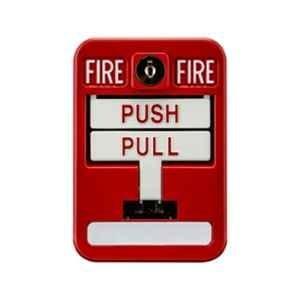
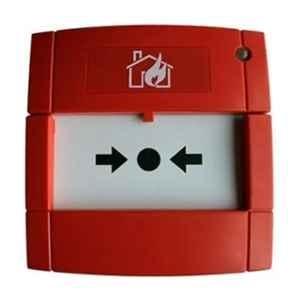
- Addressable manual call points
- Flame detectors
- Beam detectors
- Certain input modules connected to external fire protection equipment
Instead of treating several detectors as one group, an addressable fire alarm system can identify individual devices. For example, the panel may display that a smoke detector in a room has entered an alarm condition rather than simply showing that an entire floor zone is in alarm mode.
How Does an Addressable Initiating Device Work?
Addressable devices communicate with an addressable fire alarm control panel through a signalling circuit, commonly called a loop or signalling line circuit (SLC), depending on the system design.
The basic process works as follows:
- Each device is assigned a unique address through electronic programming, switches, or another manufacturer-specific method.
- Multiple devices are connected to the same addressable loop.
- The fire alarm panel communicates with and monitors individual devices on the loop.
- The panel can receive different conditions such as normal, alarm, or fault from the devices.
- When a device detects a fire condition, its address allows the panel to identify which device generated from the signal.
Many addressable systems use loop arrangements designed to maintain communication if there is a wiring fault. For example, a Class A arrangement can allow communication with devices from both directions when the loop is broken at a single point. The actual fault tolerance depends on the panel, wiring class, and system design.
Types of Addressable Initiating Devices
Addressable systems can support several types of initiating devices depending on the panel and communication protocol.
Addressable Smoke Detectors
These detect smoke and may use optical, ionisation or multi-criteria sensing technologies. The appropriate type depends on the application and environmental conditions.
Addressable Heat Detectors
Heat detectors respond to a fixed temperature, rate of temperature rise, or a combination of detection methods, depending on the model.
Addressable Manual Call Points
An addressable manual call point allows a person to manually initiate a fire alarm. Because it has an individual address, the panel can identify the specific call point that was activated.
Addressable Flame and Beam Detectors
Flame detectors can be used for applications where flame needs to be detected rapidly, while beam detectors are useful for certain large or open spaces where conventional point smoke detectors may not be suitable.
Input/Output Modules
Modules can connect external equipment or conventional devices to an addressable loop. Depending on the design, they may be used for monitoring inputs or controlling outputs associated with fire protection systems.
What Are Conventional Detectors?
A conventional fire alarm detector is connected to the fire alarm panel as part of a zone rather than having its own individual address.
Several detectors and manual call points can share one conventional zone circuit. When one device operates, the panel can generally identify that an alarm has occurred in that zone, but it does not necessarily identify which individual detector caused the alarm.
For example, if 15 smoke detectors are installed across a floor and connected to Zone 2, the panel may display Fire-Zone 2. Staff or maintenance personnel then need to investigate the zone to find the exact device.
Conventional systems are commonly considered for smaller buildings, shops, offices and simpler installations where detailed device-level identification may not be necessary.
Addressable vs Conventional Detectors: Key Differences
| Factor | Addressable | Conventional |
| Device identification | Individual device/location | Zone only |
| Wiring | Loop-based architecture | Separate circuit for each zone |
| Fault detection | Can identify individual device faults | Generally, identifies the affected zone |
| Scalability | Easier to expand in larger systems | Expansion depends on available zones and panel capacity |
| Installation cost | Usually, higher upfront | Usually, lower upfront |
| Maintenance | Faster device-level troubleshooting | More manual investigation may be required |
| Best suited for | Large or complex buildings | Small or simpler buildings |
The biggest difference between addressable vs conventional detectors is the level of information available at the panel. Addressable systems can tell operators which individual device is reporting an alarm or fault, while conventional systems generally narrow the event down to a zone.
This can also affect maintenance time. If a detector develops a fault in an addressable system, the panel can provide device-specific information. With a conventional system, technicians may need to inspect multiple devices within the affected zone to locate the problem.
Advantages of Addressable Initiating Devices
Addressable initiating devices can offer several practical benefits for larger or more complex installations:
- Pinpoint device identification: Helps personnel locate an alarm or fault faster.
- Faster troubleshooting: Device-level information can reduce time spent checking multiple detectors.
- Better diagnostics: Some systems can provide information about detector condition, contamination or other maintenance-related issues.
- Flexible expansion: Addressable systems can be designed to support larger installations and changing layouts.
- Reduced cabling in larger sites: Multiple devices can communicate over addressable loops rather than requiring a separate zone circuit for every group.
Limitations of Addressable Systems
Addressable technology is not automatically the right choice for every building.
The initial equipment cost can be higher than a conventional system. Addressable panels and devices may also require trained personnel for programming, commissioning, and troubleshooting. In very small premises with a simple layout, the additional functionality may not provide enough practical benefit to justify the higher initial investment.
The final choice should therefore consider the building size, risk level, layout, local requirements, and future expansion plans.
When Should You Choose Addressable Over Conventional?
An addressable fire alarm system may be considered for:
- Large commercial buildings
- Multi-floor buildings
- Warehouses and factories
- Hospitals and healthcare facilities
- Shopping malls
- Complex industrial facilities
- Sites where quick alarm location is important
- Buildings that may be expanded or frequently reconfigured
A conventional system may still be suitable for a small shop, single-floor office, or other simple premises where the number of zones and devices is limited.
The decision should be based on the fire risk assessment, applicable regulations, system design requirements, and advice from a qualified fire alarm professional.
How to Choose the Right Addressable Initiating Device
Before purchasing an addressable initiating device, consider:
- Application environment: Kitchens, dusty areas, warehouses and areas with steam may require different detection technologies.
- Panel compatibility: Confirm that the device supports the panel’s communication protocol.
- Certification: Check the required approvals and applicable standards for the project.
- Loop capacity: Verify how many devices and modules the selected panel and loop can support.
- Installation requirements: Consider wiring and device spacing along with accessibility.
- Supplier support: Get technical assistance and commissioning support.