

Top Tips for Commercial And Enterprise AV Projects (2026)
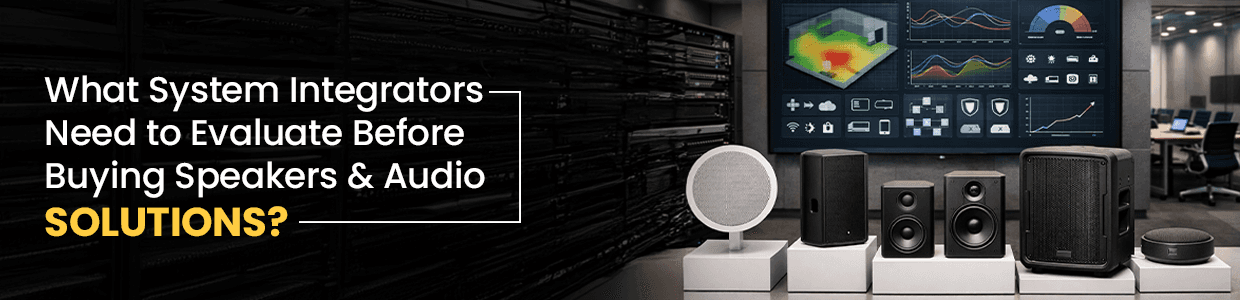
For a system integrator, selecting the right speakers and audio solutions is not just about sound quality—it’s about performance, scalability, compliance, and long-term reliability. A wrong choice can lead to poor intelligibility, high maintenance costs, and client dissatisfaction.
Below are the most important factors system integrators should explore before finalizing any audio solution.
1. Understand the Application And Use Case
Before choosing speakers, clearly define:
- Type of space (office, conference room, auditorium, hospital, mall)
- Audience size
- Speech vs music priority
- Operating hours (8×5 or 24×7)
Tip: Speech-focused areas (conference rooms, classrooms) require high speech intelligibility, while hospitality or retail needs balanced music output.
2. Room Acoustics And Speaker Placement
Acoustics directly impact audio performance.
System integrators should evaluate:
- Room dimensions & ceiling height
- Wall materials (glass, concrete, wood)
- Ambient noise levels
- Echo and reverberation time (RT60)
Best practice: Use distributed speaker systems instead of fewer high-power speakers for uniform coverage.
3. Speaker Type Selection (Critical)
Choose the right speaker type based on environment:
| Application | Recommended Speaker Type |
| Offices & meeting rooms | Ceiling speakers |
| Auditoriums | Line array / column speakers |
| Retail & hospitality | Wall-mounted speakers |
| Outdoor areas | Weatherproof speakers |
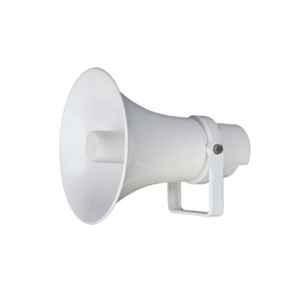
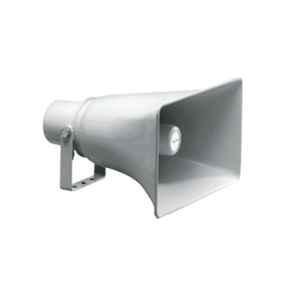
| Paging systems | Horn speakers |
Tip: Always check IP rating for outdoor or semi-outdoor installations.
4. Power Handling And Sensitivity Ratings
Key technical parameters to check:
- RMS & peak power
- Speaker sensitivity (dB SPL)
- Coverage angle
Higher sensitivity speakers deliver louder sound with less amplifier power, improving efficiency and system lifespan.
5. Impedance vs 70V/100V Line Systems
System integrators must decide between:
- Low impedance (4/8 ohms) — Small rooms, high-fidelity audio
- 70V/100V line systems — Large commercial spaces, multiple zones
Pro tip: For enterprise and multi-zone projects, 100V line systems offer easier scalability and reduced cable losses.
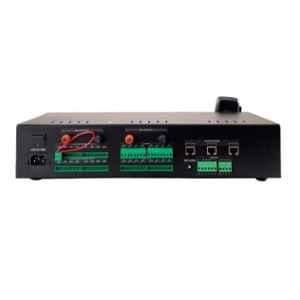
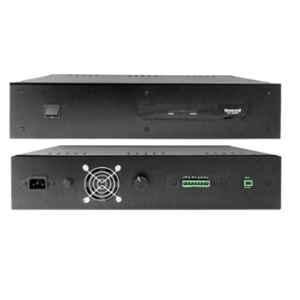
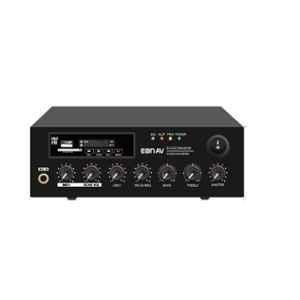
6. Amplifier Compatibility And DSP Support
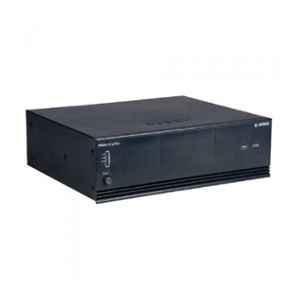
Speakers must always be paired with compatible amplifiers.
Check for:
- Matching wattage
- Built-in DSP (EQ, limiter, delay)
- Protection circuits
- Expandability
Mismatch between speakers and amplifiers is one of the most common integration failures.
7. Scalability And Future Expansion
Commercial projects often grow.
System integrators should ask:
- Can more speakers be added later?
- Does the system support zoning?
- Is network-based audio (AVoIP) supported?
Future-ready systems reduce rework costs and downtime.
8. Integration with AV Control And Automation Systems
In 2026, audio systems are expected to integrate with:
- Central AV controllers
- Touch panels & mobile apps
- Voice assistants
- BMS & IoT platforms
Choose audio solutions that support open protocols and APIs.
9. Compliance, Safety And Certifications
For commercial installations, ensure:
- Fire safety compliance
- Emergency paging support
- CE/ROHS certifications
- Local regulatory standards
This is especially critical for hospitals, airports, malls, and government buildings.
10. Brand Reliability, Warranty And Support
System integrators must evaluate:
- Brand track record in commercial AV
- Availability of spares
- Warranty duration
- Technical documentation & training
Tip: Prefer brands and suppliers that offer project-level support and AMC options.
11. Total Cost of Ownership (TCO)
Don’t focus only on the upfront price.
Consider:
- Installation effort
- Maintenance frequency
- Power consumption
- Downtime risk
Lower TCO = higher customer satisfaction.
12. Supplier And Distribution Partner Strength
A strong supplier helps system integrators with:
- Bulk pricing
- Faster delivery
- Product availability
- Pre- and post-sales technical support
Reliable partners simplify large-scale deployments.
Final Takeaway for System Integrators
To successfully deliver professional audio solutions, system integrators must think beyond products and focus on system design, compatibility, scalability, and lifecycle management.