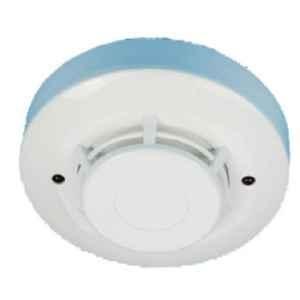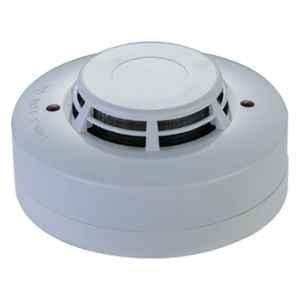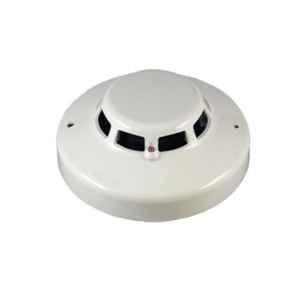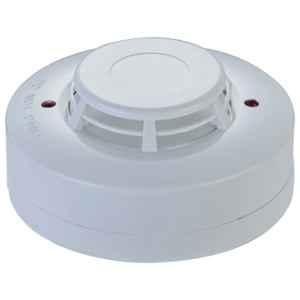


Selecting the wrong fire detection system can be more than just a safety mistake. It can lead to complete system failure with no safety response, as detection is the very first step to evade fire hazards. Moreover, in case of inefficient detection devices, the result may be false alarm triggers, downtime, and failed safety inspections for commercial buildings.
A reliable detection system needs the right type of fire detectors, which is decided based on the installation environment and detection method it uses. However, there are many challenges to it. The selection process cannot be as simple as placing an online order. Commercial kitchens, dusty house ceilings, server rooms, parking lots, warehouses, and other places have different types of environments, where a single detection device cannot work efficiently. Somewhere you will have to install a heat detector, and in many places, smoke or multi-sensor detectors will do a great job.
There are three major types of fire detectors in an fire alarm system: smoke detector, heat detector, and multi-sensor detector. Each one is designed to detect fire hazards with unique technologies, making them efficient for specific applications and installation environments. This blog reveals all three types of fire detectors, their workings, and proper differentiation. So, you can source the right type of detector for a commercial building.
How Different Types of Fire Detectors Work?
Smoke Detectors (Ionization vs Photoelectric)
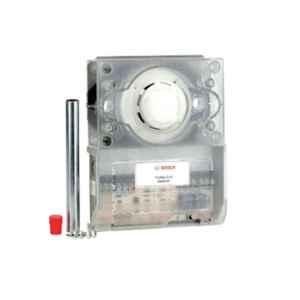
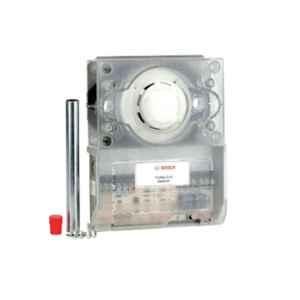
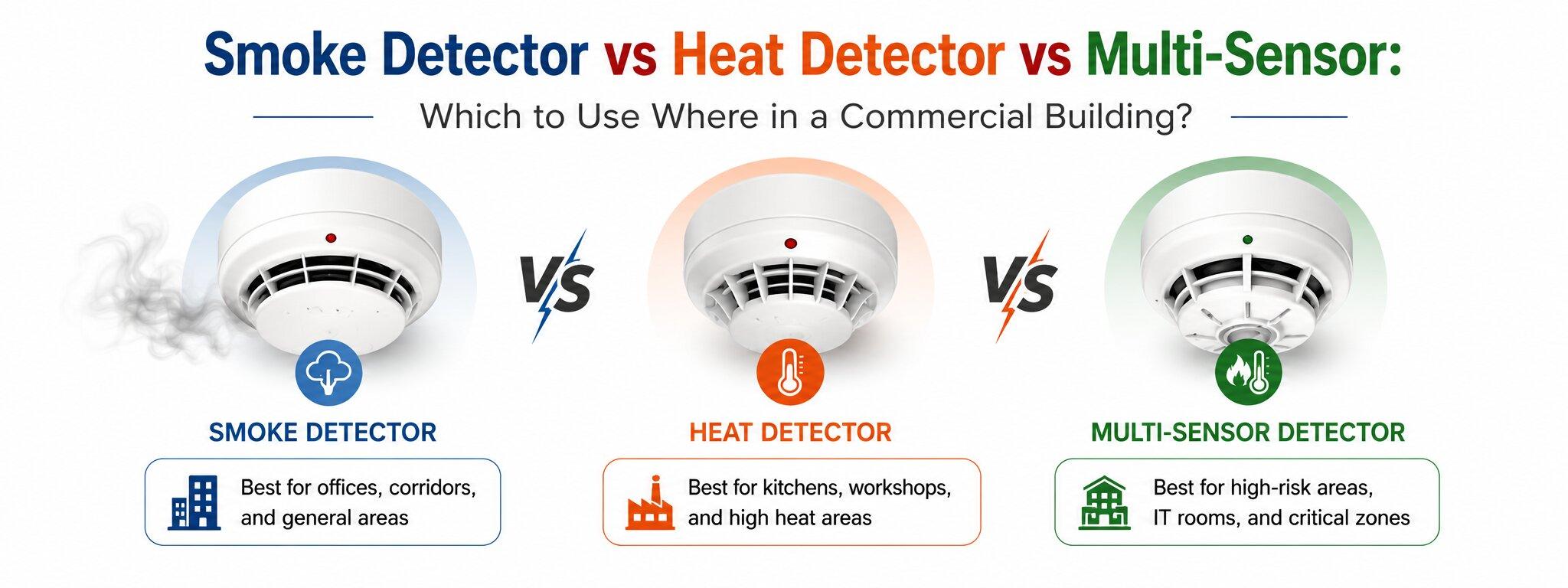
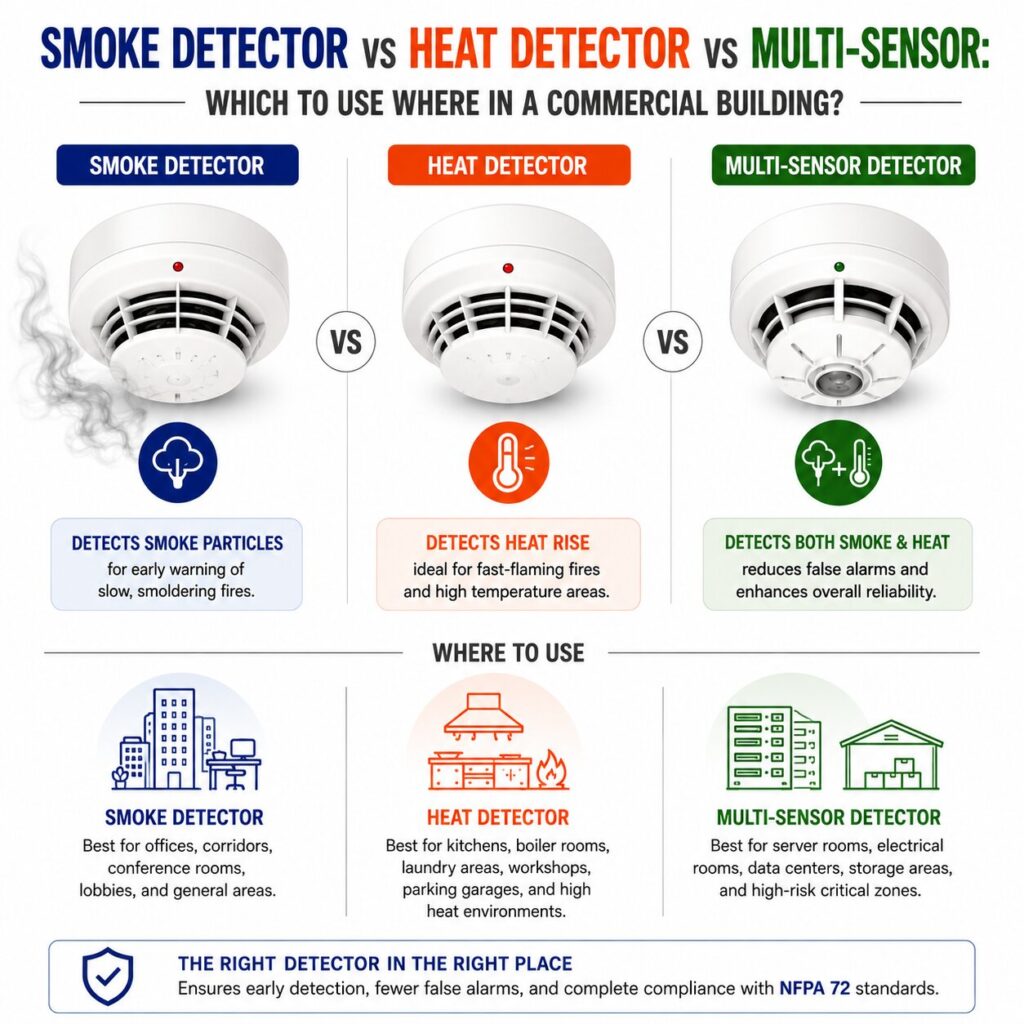
Smoke detectors have the ability to sense the smoke particles in the air to verify and detect fire breakouts inside buildings. Detectors based on ionization technology are best for responding quickly to fast-flaming fires. Where photoelectric-based detection technology is ideal for detecting slow and smoldering fires that produce visible smoke.
Their Limitation: Smoke detectors can cause false fire alarms when they are installed in areas with steam, dust, or cooking fumes, so they cannot be installed in kitchens, dusty warehouses, or workshops.
Heat Detectors (Fixed Temperature vs Rate-of-Rise)
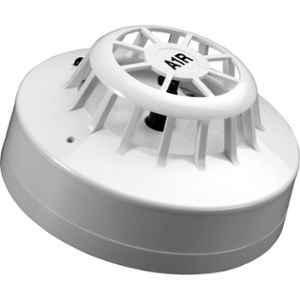
Heat detectors work by sensing the change in temperature in the environment. These devices can either trigger fire alarms after the temperature reaches a preset limit (fixed temperature) or by sensing a rapid increase in temperature (rate-of-rise). Also, heat detectors are highly preferred where smoke detectors cannot be installed due to false fire alarm activations.
Their Limitation: Heat detectors usually sense the fire hazard only after heat builds, which makes them slower than smoke detectors. Hence, they are mainly equipped to protect the property instead of providing early life safety.
Multi-Sensor Detectors
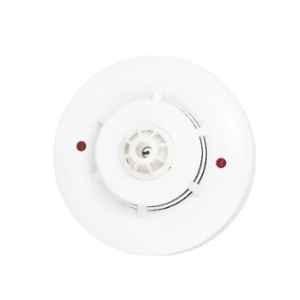
Multi-sensor detectors use all three detection technologies: photoelectric smoke sensing, ionization, and heat detection for effectively sensing fire hazards. They use advanced algorithms to analyze the data received from multiple sensors before activating fire alarms, which reduces false triggers significantly.
Advantage: These devices provide reliable detection and are faster than any other fire detection technology, making them the best overall choice for commercial buildings.
A Quick Comparison Table: Smoke Detector Vs Heat Detector Vs Multi-Sensor Detector
| Parameter | Smoke Detector | Heat Detector | Multi-Sensor Detector |
| What it senses | Smoke particles in the air | Rise in temperature or rate-of-rise heat | Both smoke and heat (sometimes CO too) |
| Best for | Bedrooms, living rooms, offices | Kitchens, garages, boiler rooms, workshops | High-risk or mixed-use industrial areas |
| False alarm risk | Higher (triggered by steam, dust, cooking fumes) | Very low | Low (cross-checks signals before alarming) |
| Detection speed | Fast for smouldering fires | Fast for flaming/high-heat fires | Fast for both fire types |
| Ideal fire type | Slow, smouldering fires | Fast, high-heat fires | Any fire type |
| Cost | Low | Low to moderate | Moderate to high |
| Maintenance | Regular cleaning needed (dust-sensitive) | Low maintenance | Moderate maintenance |
| Common technology | Ionisation or photoelectric sensor | Fixed temperature or rate-of-rise sensor | Combined smoke + heat (+ CO) sensors |
| Limitation | Not ideal for kitchens/garages | Won’t detect smoke-only fires early | Higher upfront cost |
A Personal Guide to Tell You Which Fire Detector to Use Where
Commercial Kitchens
- Best Choice: A fixed-temperature heat detector
- Why: These detectors will prevent false alarms caused by the smoke and heat released because of cooking.
Server Rooms and Data Centers
- Best Choice: Multi-sensor or Aspirating smoke detectors (ASD)
- Why: These detectors are best for early fire detection to save lives. They can efficiently detect fire hazards even after the strong airflow from cooling systems.
Warehouses and Manufacturing Floors
- Best Choice: Heat detectors or Multi-sensor detectors
- Why: They will reduce false fire alarm activations because of the dust and fumes produced by daily operations.
Offices and Conference Rooms
- Best Choice: Photoelectric or Dual-sensor smoke detectors
- Why: These detectors can provide early fire detection in the clean indoor environment to protect lives.
Elevator Hoistways
- Best Choice: Aspirating smoke detectors (ASD) or Linear heat detectors
- Why: They are considered ideal for fire safety requirements and provide reliable detection in such confined spaces.
Why Choose DigiMRO for Buying Reliable Fire Detection Systems for Commercial Projects?
Here are major benefits of sourcing fire detection systems from DigiMRO:
- We deliver certified fire alarm products that meet the Indian safety standards.
- Provide consistent supply of goods for large projects.
- Offer competitive pricing for our bulk buyers.
- Deliver timely for our clients to match project deadlines.
- Super responsive after sales support.