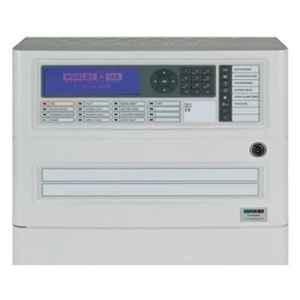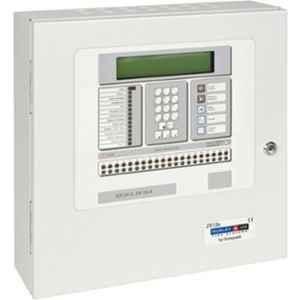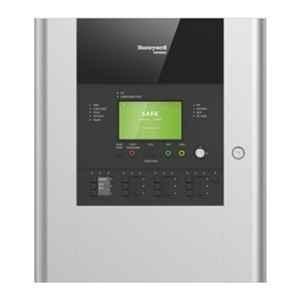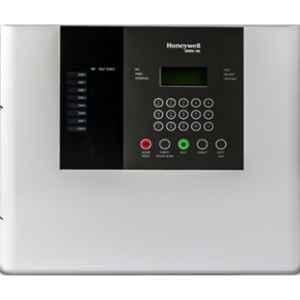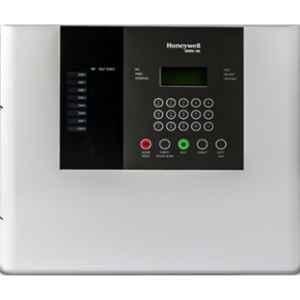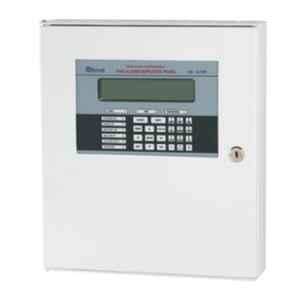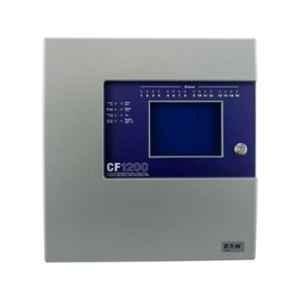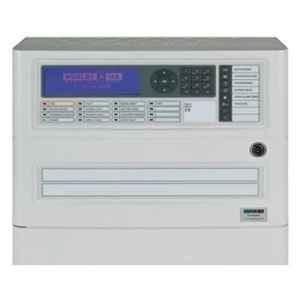


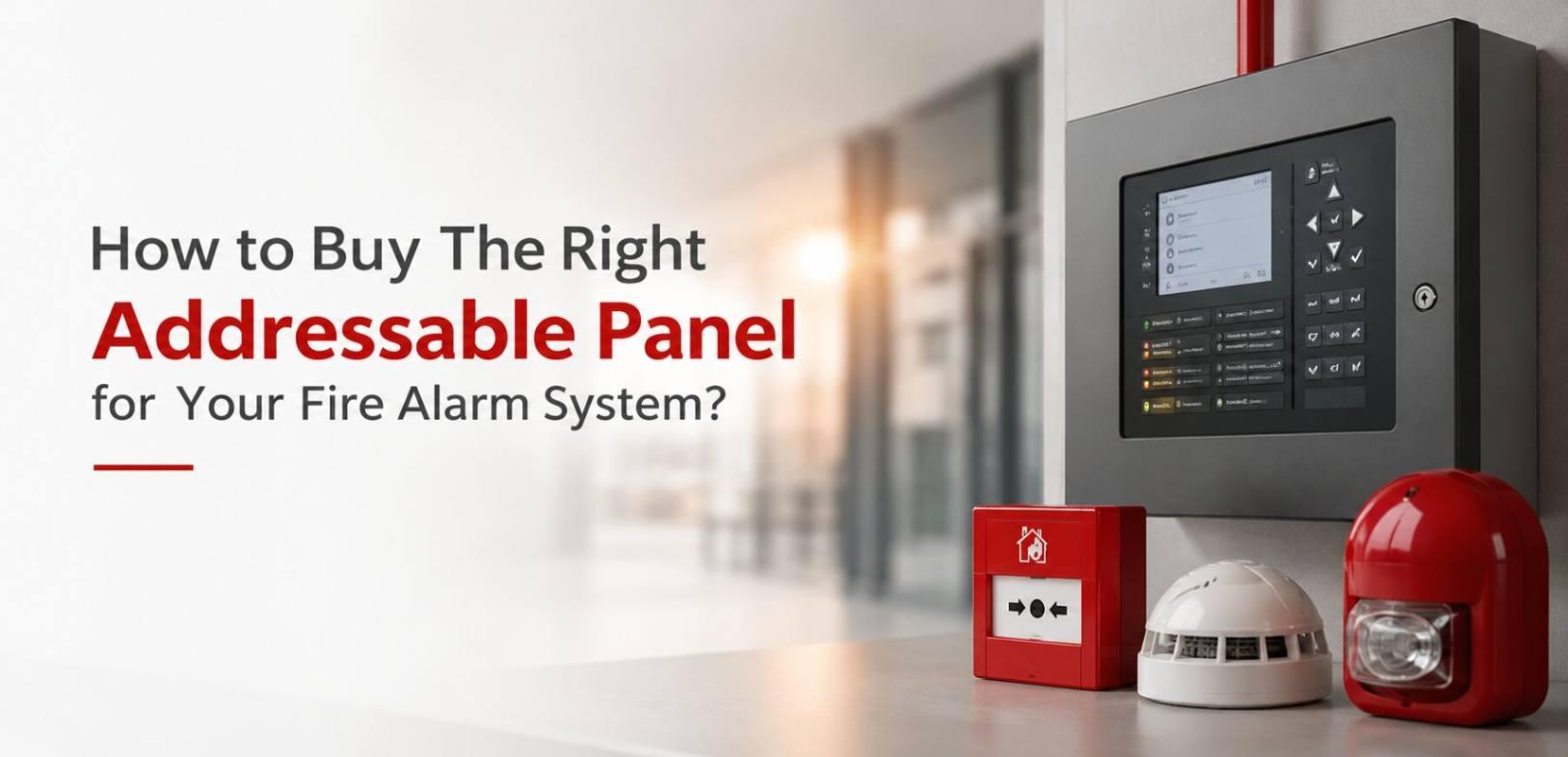
An addressable panel is one of the most critical parts of a fire detection and alarm system. It acts as the brain of the system, making essential decisions based on data from connected devices such as detectors, sensors, notification devices, manual call points, suppression systems, and more. It also helps technicians with repair and maintenance through self-diagnostic features. Every device sends signals and operational data to the panel, which interprets them and shows system faults or wiring issues. Because each device has a unique address, the panel can accurately locate it during a fire outbreak. Choosing the right addressable panel for your fire alarm system is vital for reliability and performance. That is why we have curated this blog to show exactly how you can buy the top-grade panel for your space.
What is an Addressable Panel?
An addressable panel is a hardware device used in fire safety systems as the main control unit. The panel can accurately pinpoint the location of a detector when an alarm is triggered, so protective measures can be taken as soon as possible. It constantly communicates with every connected device using a signaling line circuit (SLC loop) to know the operational status and fire signal. It can connect with smoke detectors, heat detectors, manual call points, input/output modules, sounders, and many other devices depending on the system design.
A Complete Buying Guide to Choose the Right Addressable Panel
Number of Addressable Devices
Check how many addressable devices the building will require to set up a reliable fire safety zone. Consider all the devices such as smoke detectors, heat detectors, various other sensors, manual call points, notifications devices, and more. You should select a panel that can not only fulfill today’s requirements, but also has the capacity for future device additions.
Choose the Right Number of Loops
Another major point to remember is to choose the panel with the right number of loops for reliable communication between fire alarm devices. A single loop panel might work great for smaller projects at hotels, hospitals, factories, warehouses, and campuses. Whereas, the large office buildings may require a panel with multiple loops.
Compatibility Between Panel and Devices
You must choose an addressable panel that is compatible with connected devices. It is one of the most critical factors to consider, as not every detector or sensor works well with every panel. The communication protocol between them should be the same, and most commonly, addressable panels use manufacturer-specific protocols.
Here are the devices you should check the compatibility with:
- Smoke and heat detectors
- Manual call points
- Sounders
- Input and output modules
- Monitor and control modules
- Repeater panels
Should Meet Safety Standards
The addressable panel is a fire alarm component, which is a life safety system that should meet the standard and approval requirements for the project. You must look for IS 15908:2021 certification for Indian installations. The IS 2189 standard covers the selection, installation, and maintenance of automatic fire detection and alarm systems.
Power Supply and Battery Backup
The panel must have enough power to operate all the connected devices and function even during power failures.
Check for:
- Power supply rating
- Auxiliary DC output
- Battery capacity
- Charger capacity
- Alarm load
- Standby requirements
Consider Networking for Large Buildings
Large facilities require multiple panels to function, in which case networking plays a vital role. A system connected with networking can utilize multiple panels, repeaters, devices, and control points for effective communication. Some of the most advanced systems can use several panels with a higher capacity for connected devices to establish a reliable fire safety system in large places.
Major Benefits of Using Addressable Panels
| Benefit | Short Explanation |
| Device Identification | Shows the exact alarm location. |
| Faster Response | Helps locate fire quickly. |
| Fault Detection | Identifies device or wiring problems. |
| Easy Monitoring | Monitors all connected devices. |
| Easy Expansion | Supports additional devices. |
| Fewer False Alarms | Helps identify the alarm source. |
| Easy Maintenance | Simplifies testing and troubleshooting. |
| Large Site Support | Suitable for complex buildings. |
Conclusion
Choosing the right addressable panel is essential to keep a fire alarm system safe and reliable. Before buying, you must check the number of devices, loops, device compatibility, safety standards, power backup, and networking features. The panel should meet your current needs and also have room for adding future devices.
An ideal addressable panel can help identify the exact location of a fire, detect faults, monitor devices, and speed up the response timing. By checking these important factors before purchase, system integrators and facility owners can choose a panel that provides reliable protection and easy maintenance.