

A CCTV system can have cameras of the highest quality, recording equipment that is fairly reliable, and a network that has been designed properly, but the entire setup can still run into trouble if the power supply itself hasn’t been selected the right way. Cameras need a power source that is both stable and properly suited to them in order to operate consistently, and this becomes even more important when features such as infrared night vision, PTZ movement, or other power consuming functions are involved in the setup.
For system integrators, selecting a CCTV power supply therefore tends to be a bit more involved than simply checking the wattage that’s printed on the unit itself. Things like the camera’s voltage, its maximum power consumption, the number of cameras being used, the cable distance involved, any PoE requirements, and the installation environment all need to be looked at properly before an order is actually placed.
What Is a CCTV Power Supply?
A CCTV power supply is a device that provides the electrical power required in order to operate surveillance cameras, and in certain installations, other CCTV components as well. Depending on how the system has been set up, cameras may either use a separate DC power supply, or they may receive power directly through the Ethernet cable itself, using what is known as Power over Ethernet, or PoE.
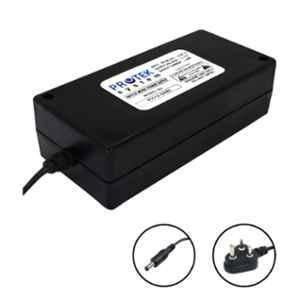
A fairly common option for compatible cameras tends to be a 12V DC power supply. For installations that involve several cameras at once, system integrators are also able to use multi channel CCTV power supplies, or SMPS units, which are able to provide power to multiple devices from a single source rather than requiring a separate unit for each camera.
What Types of CCTV Power Supplies Are Available?
12V DC CCTV Power Supply
12V DC power supplies are commonly used with cameras designed to accept a 12V DC input. They can be used for individual cameras or as part of a larger installation where several cameras are powered separately.
Before selecting one, integrators should check the camera’s required input voltage and power consumption.
Multi-Channel CCTV Power Supply
Multi-channel power supplies or CCTV SMPS units are designed to power several cameras from one central unit. They are useful for commercial projects where multiple cameras are installed in the same building or facility.
Depending on the model, these units may be available with different channel configurations, such as 4-channel, 8-channel or 16-channel outputs. Separate outputs can also make it easier to identify and troubleshoot individual camera power issues.
PoE Power Supply
PoE allows compatible IP cameras to receive power and network data through the same Ethernet cable. This can simplify installation by reducing the need for separate power cabling at every camera location.
How to Choose the Right CCTV Power Supply
There are several factors system integrators should check before selecting a power supply.
Check the Voltage Requirement
The first step is to check the camera manufacturer’s specifications. A camera may require 12V DC, another voltage, or PoE depending on its design.
The output voltage of the power supply should match the camera’s required input. Choosing a power supply based only on its wattage while ignoring the required voltage can lead to compatibility and performance problems.
Calculate the Total Power Requirement
The number of cameras and their power consumption should be considered together.
A simple calculation is:
Total camera load = Number of cameras × Maximum power consumption per camera
The integrator should then select a power supply with capacity above the calculated load rather than operating the unit continuously at its maximum rating. If different cameras have different power requirements, calculate the consumption of each model separately and add the figures together.
Check Maximum Power Consumption
Camera power consumption can change depending on operating conditions. A camera may use more power when infrared illumination, heaters, PTZ movement or other features are active.
For this reason, system integrators should check the maximum power consumption specified by the manufacturer instead of using only the typical consumption figure.
Choose the Right Protection Features
A CCTV power supply should also provide suitable protection for the connected equipment. Depending on the model, useful protection features can include:
- Overload protection
- Short-circuit protection
- Over-voltage protection
- Thermal protection
- Surge protection, where applicable
These features can be particularly useful when one power supply is connected to several cameras. If one output develops a fault, appropriate protection can help limit the impact on the rest of the installation.
Check the PoE Requirements
For IP cameras using PoE, integrators need to look at more than the number of PoE ports on a switch.
Check the following:
- Camera PoE standard
- Maximum camera power consumption
- PoE power available per port
- Total PoE power budget of the switch
- Cable length
- Number of connected cameras
A switch may have enough physical ports for a project but still not have enough total power capacity to run all the connected cameras at their required load.
CCTV Power Supply vs PoE: Which Should You Use?
| Factor | CCTV Power Supply | PoE |
| Camera type | Analog and compatible DC cameras | IP cameras |
| Power connection | Separate power connection | Power through Ethernet |
| Data and power | Usually separate | Same Ethernet cable |
| Installation | May require separate power and data cabling | Can simplify cabling |
| Best suited for | DC-powered CCTV systems | Network-based IP CCTV systems |
Neither option is automatically suitable for every project. The decision should be based on the camera type, existing infrastructure, network design, cable layout and project requirements.
Source CCTV Power Supplies in Bulk from DigiMRO
Selecting the right power supply is an important part of planning a reliable CCTV installation. Whether a project uses 12V DC power supplies, multi-channel SMPS units or PoE equipment, the choice should be based on camera requirements, total power consumption, cable distance and the overall system design.
DigiMRO helps system integrators and project installers source CCTV and networking products according to their project requirements. Buyers can review product specifications and source CCTV power supplies along with cameras, NVRs, PoE switches, Cat6 cables and other surveillance components.