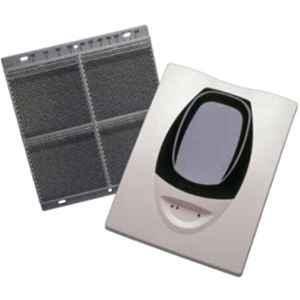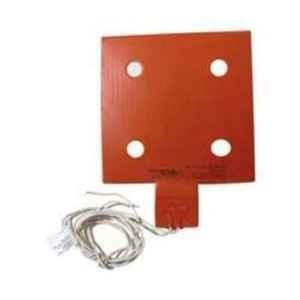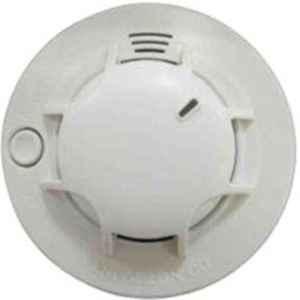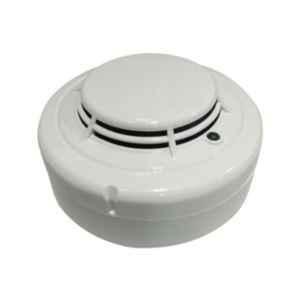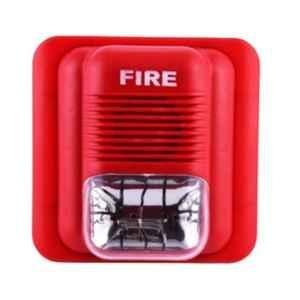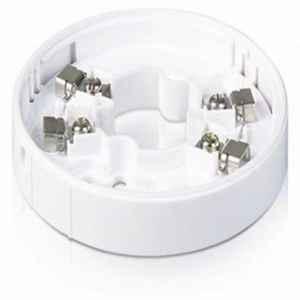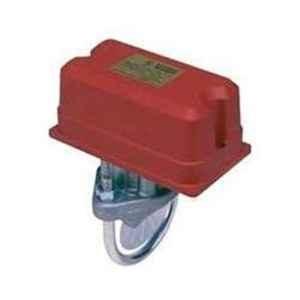


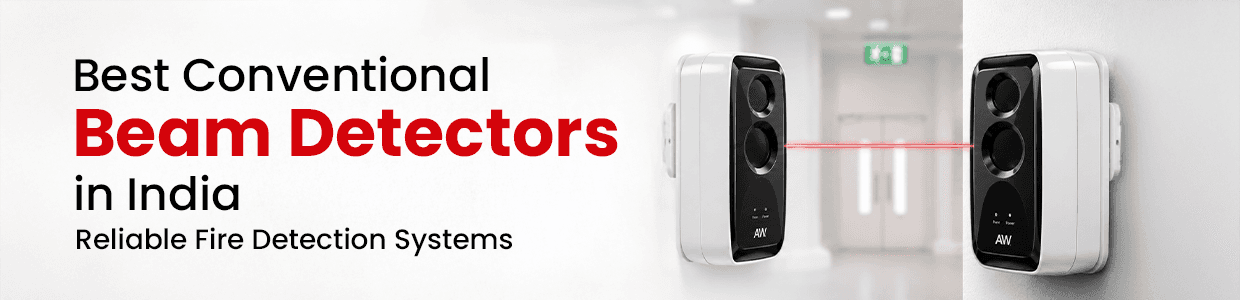
Conventional beam detectors are fire alarm sensors that are used in large and high-ceilinged spaces. They work by emitting a powerful beam of infrared light that directly touches the other side of the wall, and if fire smoke reflects it or obscures it, the fire alarm will be triggered. This device is essential for installing a reliable fire detection system for commercial spaces like warehouses, manufacturing facilities, and more. They are highly accurate and are designed to be very durable and work in various types of industrial environments. The outer casing of the detectors protect its internal components from dust, dirt, and water damage. Choosing the best quality beam detectors can be a difficult task with so many options available online. This is why we have curated this blog to reveal the top 10 best conventional beam detectors to buy from top brands for higher safety purposes.
What is a Conventional Beam Detector?
Conventional beam detectors are specialized sensors that use infrared beams to detect fire hazards. These detectors emit a beam of infrared light all the way to the other end, where the receiver is installed; if it gets obscured by the smoke, the fire alarms are activated. These types of detectors are considered ideal for large spaces with high ceilings, where heat detectors are not so effective. They provide excellent protection by accurately detecting up to 100 meters.
There are two types of detectors: conventional and addressable. The conventional beam detectors can only transmit their zone location to the control panel if a fire outbreak occurs, whereas the addressable ones can communicate their exact location for precise tracking of the fire hazard.
Common Types of Conventional Beam Detectors to Choose From
Reflective Beam Detectors
These are also called single-end beam detectors that are very commonly used in residential as well as commercial spaces. These devices have a transmitter and receiver installed on the same wall and a reflector that is installed on the opposite wall. When it emits the infrared light, it gets reflected back to the receiver. But when the smoke obscures it, the device triggers the alarm systems.
End-to-End (Transmitter-Receiver) Detectors
These types of detectors are also called projected beam detectors that allow accurate detection of fire hazards in large spaces like warehouses and auditoriums. Their installation is very simple in which a transmitter is installed on one wall, and the receiver is installed exactly in a straight alignment to the other wall. When the beam is projected, the receiver shows no sign of fire hazards, but when smoke disrupts the beam, the alarm goes on.
Motorized Auto-Aligning Detectors
Motorized auto-aligning detectors are designed to adjust their position and keep the infrared beam emitting in a straight line through motorized mounts. Over time, buildings tend to shift, vibrate, and settle with minimal shifts, so that these detectors can sense and align themselves automatically according to it.
Double Beam (UV/IR) Detectors
These types of detectors are used where the false fire alarm is most likely to happen. They are designed for complex and high risk environments for better detection efficiency. These devices emit both ultraviolet (UV) and infrared rays for higher accuracy, because both UV and IR wavelengths react differently which eliminates the risk of false warnings.
How to Choose the Right Conventional Beam Detector for Your Fire Alarm Systems?
Here are the key points to consider to select the right conventional beam detectors:
Measure Distance
These types of detectors use a transmitter and receiver to emit IR rays and receive it to detect any fire outbreaks. To install them, you will have to measure the total distance up to which they are highly effective, which is up to 100 to 150 meters. They are commonly used for large spaces where one wall has a transmitter and another has a receiver.
Installation Environment
Beam detectors can accurately sense fire hazards even in rough environments, but cannot be used in extreme conditions with the presence of corrosive gases, high humidity levels, and intense temperatures.
Self-Aligning vs Regular Beam Detectors
Conventional beam detectors have special types of self-aligning variants that have built-in motorized mounts. This technology helps the detector to self-align the IR or UV rays in a straight line for efficient detection of fire outbreaks when the building vibrates and shifts over time, changing the angle of the rays.
Adjustable Sensitivity
Make sure that your new detector comes with adjustable sensitivity to customize it as per the environmental conditions. Because of this, minor dust or steam cannot affect the accuracy of the detection systems.
Best Conventional Beam Detectors for Fire Alarm Systems
1. Notifier (Honeywell) FS-OSI-RI Conventional Beam Detector
Key Features:
- Honeywell reflective beam detection technology
- Automatic drift compensation
- Long-range smoke detection
- Easy installation and alignment
- Compatible with conventional fire alarm systems
Benefits:
- Reduces installation complexity
- Detects smoke at an early stage
- Suitable for high-ceiling applications
- Low maintenance requirements
- Improves fire safety in large facilities
2. Notifier (Honeywell) FSB-200 Conventional Beam Detector
Key Features:
- Reflective optical beam technology
- Stable long-distance operation
- Built-in alignment indicators
- Wide area coverage
- Conventional panel compatibility
Benefits:
- Covers large areas with fewer detectors
- Reduces installation costs
- Ensures reliable smoke detection
- Minimizes false alarms
- Ideal for warehouses and factories
3. System Sensor (Honeywell) BEAM1224 / BEAM1224S
Key Features:
- System Sensor single-ended reflective beam design
- Automatic environmental compensation
- Built-in alignment tools
- Wide detection range
- Optional remote test station support
Benefits:
- Simplifies installation process
- Detects smoke over long distances
- Reduces maintenance frequency
- Suitable for large commercial buildings
- Provides dependable fire detection
4. Fireray (Apollo) Fireray 5000 (F5000)
Key Features:
- Motorized auto-alignment
- Automatic calibration
- Long-range beam detection
- Intelligent drift compensation
- Remote controller support
Benefits:
- Saves installation time
- Improves detection accuracy
- Reduces maintenance effort
- Performs reliably in large spaces
- Ideal for challenging environments
5. Fireray (Apollo) Fireray 3000 (F3000)
Key Features:
- Reflective beam technology
- Automatic sensitivity adjustment
- Easy alignment system
- Conventional fire panel compatibility
- Stable optical performance
Benefits:
- Provides early smoke detection
- Lowers maintenance requirements
- Covers extensive indoor areas
- Offers reliable long-term operation
- Suitable for commercial buildings
6. Fireray/FFE Fireray One (1010-000)
Key Features:
- Laser-assisted alignment
- Single-person installation
- Automatic alignment function
- Long-distance detection capability
- User-friendly interface
Benefits:
- Speeds up commissioning
- Improves installation accuracy
- Reduces service time
- Delivers dependable smoke detection
- Suitable for warehouses and atriums
7. Hochiki espFIREbeam Xtra
Key Features:
- Automatic beam alignment
- Long-distance coverage
- Intelligent monitoring system
- Stable optical performance
- Easy configuration options
Benefits:
- Reduces installation effort
- Detects smoke quickly
- Minimizes false alarms
- Supports large-area protection
- Low maintenance requirements
8. Apollo XP95 Beam Detector Range
Key Features:
- Apollo High-performance optical sensing
- Long-range smoke detection
- Reliable system integration
- Durable construction
- Stable detection performance
Benefits:
- Enhances fire protection
- Covers wide indoor spaces
- Supports dependable operation
- Reduces detector quantity
- Suitable for industrial facilities
9. Siemens Linear Beam Detector Series
Key Features:
- Linear optical beam technology
- Long-distance detection
- Intelligent monitoring functions
- Easy maintenance access
- High system compatibility
Benefits:
- Protects expansive buildings
- Detects smoke at an early stage
- Reduces installation costs
- Ensures reliable operation
- Suitable for airports and warehouses
10. Fire Beam Company / Zeta / GST Reflective & End-to-End Beam Range
Key Features:
- Reflective and end-to-end models
- Extended detection coverage
- High optical sensitivity
- Durable industrial design
- Easy installation process
Benefits:
- Suitable for various applications
- Covers large open spaces efficiently
- Improves overall fire safety
- Offers flexible installation options
- Delivers dependable long-term performance
Conclusion
Conventional beam detectors are highly essential fire alarm devices that offer high precision and accuracy in detecting fire smoke. They use advanced IR and UV wavelength technology to detect the presence of fire smoke and reduce the false alarm activations, which are highly costly and require a full scale reset of systems. However choosing the right type of beam detectors can be tricky which is why we have revealed the names and models of the best conventional beam detectors.