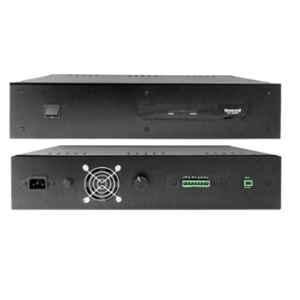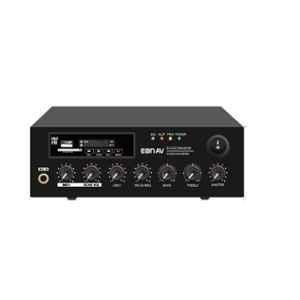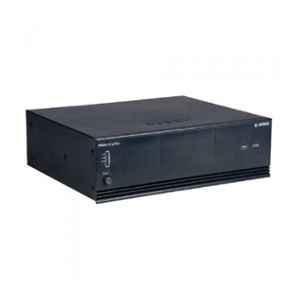


An amplifier is one of the most critical components in any professional audio system. For system integrators, selecting the right amplifier directly impacts sound quality, system reliability, scalability, and long-term performance. Whether the project involves commercial buildings, educational institutions, retail spaces, hospitality venues, or industrial facilities, understanding amplifier types and evaluation criteria is essential.
This guide explains everything a system integrator needs to know before selecting, installing, and commissioning an amplifier.
What Is an Amplifier in a System Integration Project
An amplifier increases low-level audio signals to a power level sufficient to drive loudspeakers. In integrated audio video systems, amplifiers sit between the source equipment and the speakers and must match both technically and functionally.
A properly selected amplifier ensures consistent sound pressure levels, minimal distortion, and stable operation under continuous load.
Key Factors System Integrators Must Evaluate Before Selecting an Amplifier
Application Requirements
The first step is understanding the application.
Identify whether the system is for background music, public address, paging, conferencing, or high-power audio reinforcement. Determine if the system will run continuously or intermittently. Analyze room size, acoustic characteristics, and the number of audio zones required.
These factors define amplifier power, configuration, and feature requirements.
Power Output and Headroom
Amplifier power must match the total speaker load.
Calculate the total wattage of all connected speakers and add sufficient headroom to prevent distortion and clipping. An underpowered amplifier leads to poor audio quality and potential equipment failure, while excessive power can damage speakers if not controlled properly.
Headroom is especially important in commercial and public address systems.
Speaker Impedance Compatibility
System integrators must verify impedance compatibility.
Low impedance systems such as four ohm or eight ohm are suitable for short cable runs and high-fidelity audio applications.
High impedance systems such as seventy volt or one hundred volt are ideal for large installations with long cable runs and multiple speakers connected in parallel.
The amplifier must support the chosen speaker topology.
Number of Channels and Zoning
Single channel amplifiers are used in simple installations.
Multi channel amplifiers allow independent control of multiple zones and are commonly used in commercial buildings and campuses.
Rack mount amplifiers are preferred for large projects where scalability and future expansion are required.
Amplifier Class and Efficiency
Modern installations increasingly use high-efficiency amplifier designs.
Class D amplifiers offer reduced heat generation, lower power consumption, and compact form factors, making them suitable for continuous operation environments.
Traditional amplifier classes are still used in specific applications where analog performance is required.
Input, Output, and Control Options
An integrator must verify connectivity options.
Check for microphone and line level inputs, balanced input support for long cable runs, multiple output terminals, and priority input functions for paging systems.
Control options such as remote volume control, zone selection, and integration with automation systems are important in professional installations.
Protection and Reliability Features
Commercial amplifiers must include safety and protection features.
Thermal protection prevents overheating. Short circuit and overload protection safeguard both the amplifier and connected speakers. Reliable cooling and robust construction reduce maintenance and service downtime.
These features are critical in mission-critical installations.
Types of Amplifiers Used in System Integration
Mixer Amplifiers
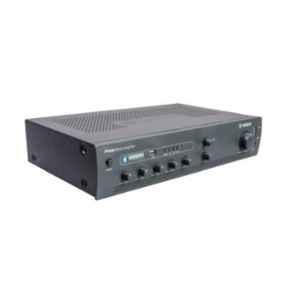
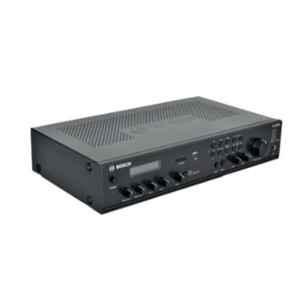
Mixer amplifiers combine multiple audio inputs with amplification in a single unit. They are commonly used in small to medium public address systems, conference rooms, and retail spaces.
Power Amplifiers
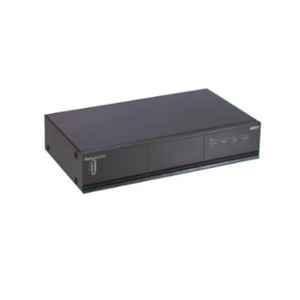
Power amplifiers focus solely on amplification and are used with external mixers or processors. They are suitable for large systems requiring higher power and advanced signal control.
High Impedance Line Amplifiers
Seventy volt and one hundred volt line amplifiers are designed for distributed audio systems with multiple speakers over long distances. These are widely used in commercial buildings, factories, schools, and transportation hubs.
Multi Channel Amplifiers
Multi channel amplifiers support multiple zones or speaker groups from a single unit. They simplify rack installations and improve system management.
Installation and Commissioning Checklist for System Integrators
- Verify total speaker load before connecting.
- Confirm impedance and voltage settings
- Ensure proper ventilation and rack spacing.
- Use quality cabling and secure terminations.
- Label zones and channels clearly.
- Test audio levels and distortion at full load
- Document settings and provide system handover information
Following these steps reduces post-installation issues and ensures system reliability.
Common Use Cases
- Office and corporate buildings use amplifiers for paging and background music.
- Retail environments require consistent audio coverage across multiple zones.
- Educational institutions rely on amplifiers for announcements and emergency communication.
- Industrial facilities need robust amplifiers for harsh operating conditions.
- Hospitality venues require scalable audio systems with zone control.
- Each use case demands careful amplifier selection.
Conclusion
For system integrators, an amplifier is not just a power device but a core element of system performance. Selecting the correct amplifier requires evaluating application needs, power requirements, speaker compatibility, control features, and long-term reliability.
A well-chosen amplifier ensures clear audio, stable operation, and customer satisfaction while reducing service calls and system downtime.
Understanding amplifier types and integration best practices helps system integrators deliver professional, scalable, and future-ready audio solutions.